HOW TO SELL A BUSINESS IN CANADA
Selling my business in Canada

How to sell a business in Canada with expert guidance on valuation, preparation, buyers, due diligence, and maximizing your business sale is one of the most significant financial decisions an owner will make. Whether you are planning for retirement, pursuing a new opportunity, or seeking to maximize the value you’ve built, a successful sale requires careful preparation, strategic planning, and expert guidance.
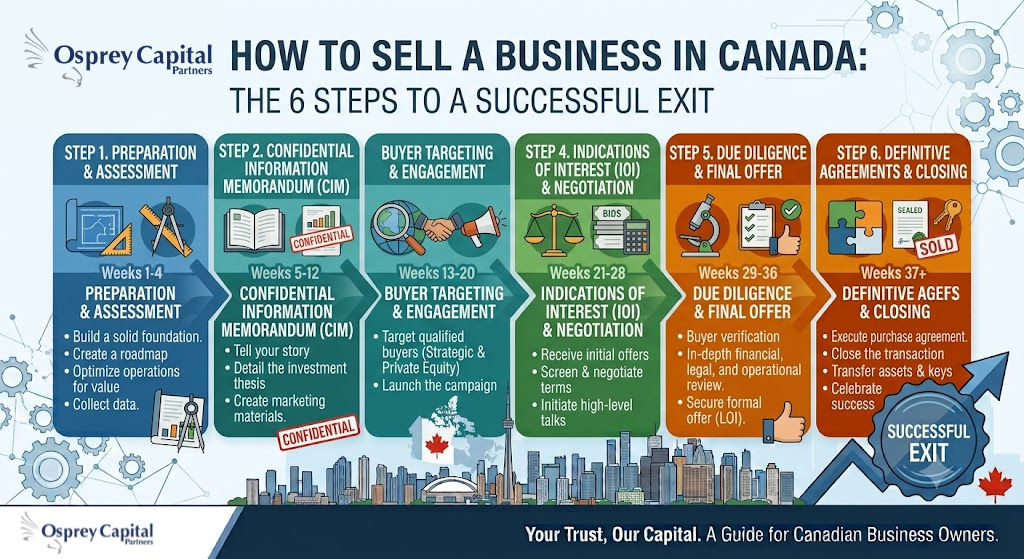
Before going to market, obtain a professional business valuation. Buyers evaluate businesses based on factors such as financial performance, recurring revenue, profitability, growth potential, customer concentration, management structure, and industry trends. Understanding your company’s value helps establish realistic expectations and supports a stronger negotiating position.
Well-prepared businesses typically attract more qualified buyers and command higher valuations. Organize your financial statements, resolve outstanding legal or operational issues, document key business processes, and ensure your management team can support the business through a transition.
Maintaining confidentiality is essential throughout the sale process. An experienced M&A advisor can prepare professional marketing materials, identify qualified buyers, and manage the process without disrupting employees, customers, or suppliers. Prospective buyers should sign a Non-Disclosure Agreement (NDA) before receiving sensitive information.
Potential buyers may include strategic acquirers, private equity firms, management teams, family offices, or individual entrepreneurs. Each buyer type has different objectives and acquisition criteria. Evaluating buyer fit is just as important as evaluating purchase price.
Once buyers express interest, they typically submit a Letter of Intent (LOI) outlining the proposed purchase price, deal structure, financing, and key terms. Negotiations often address valuation, working capital, representations and warranties, transition support, and closing conditions.
During due diligence, buyers verify the information provided and assess financial, legal, operational, tax, and commercial aspects of the business. Being well-prepared for this stage can help maintain deal momentum and reduce the risk of delays.
Following successful due diligence, legal documentation is finalized, financing is completed, regulatory requirements are satisfied where applicable, and the transaction closes. Depending on the agreement, the seller may provide transition assistance to help ensure a smooth ownership transfer.
The sale process typically takes between six and twelve months, although timing varies depending on business size, industry, market conditions, and buyer demand. Businesses that are well-prepared generally experience smoother transactions.
Selling a business involves far more than finding a buyer. An experienced M&A advisor helps position your company, maintain confidentiality, manage negotiations, coordinate due diligence, and maximize shareholder value throughout the transaction.
How do I know if my business is ready to sell?
Businesses with consistent financial performance, documented operations, and a clear growth story are generally more attractive to buyers.
Can I sell my business confidentially?
Yes. Confidentiality is maintained through carefully managed marketing processes and legally binding Non-Disclosure Agreements.
Should I sell shares or assets?
The optimal structure depends on tax considerations, buyer preferences, and your specific circumstances. Professional legal and tax advice is recommended.
What documents will buyers request?
Buyers commonly review financial statements, tax returns, customer contracts, employee information, leases, operational procedures, and legal documentation during due diligence.
What increases the value of a business?
Strong profitability, recurring revenue, diversified customers, experienced management, documented systems, and demonstrated growth potential can all contribute to higher valuations.
Next Steps
Every business sale is unique. Proper planning, experienced transaction advice, and a structured sale process can significantly improve outcomes. If you are considering selling your business, speaking with an experienced M&A advisor early in the process can help you maximize value and achieve your objectives.

Contact
Quick Links
Privacy