BUSINESS SALE TIMELINE
Selling a business is a complex process that requires careful planning, preparation, and execution.

Selling a business is a complex process that requires careful planning, preparation, and execution. While every transaction is unique, most business sales follow a similar timeline and typically take 6 to 12 months from initial planning to closing. Understanding each stage of the process can help business owners prepare for a successful transaction and avoid unnecessary delays.
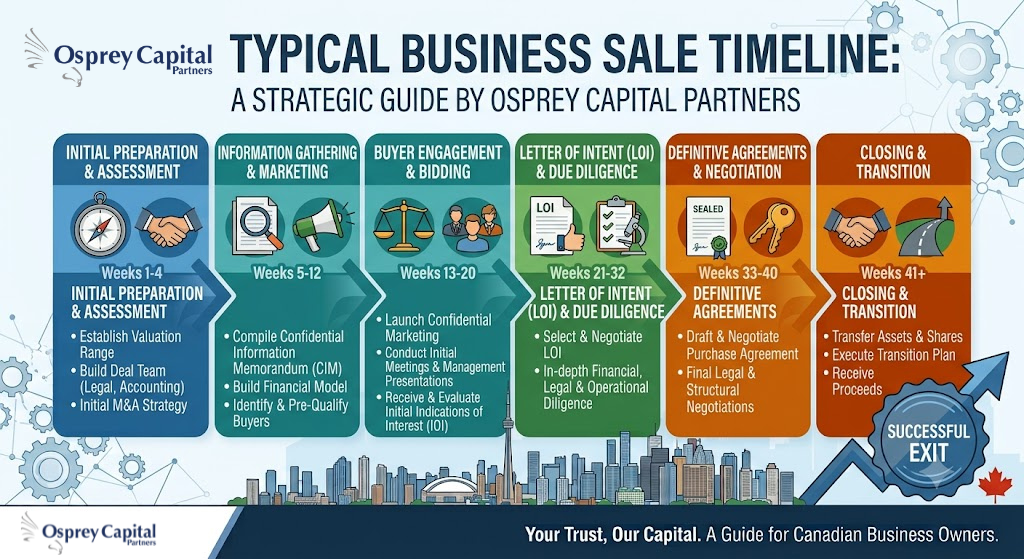
| Stage | Estimated Time | Key Activities |
|---|---|---|
| 1. Preparation & Planning | 4–8 Weeks | Business valuation, financial review, tax planning, selecting an M&A advisor, preparing marketing materials. |
| 2. Go to Market | 4–12 Weeks | Identify qualified buyers, confidential outreach, execute NDAs, distribute confidential information memorandums (CIMs). |
| 3. Buyer Evaluation | 4–8 Weeks | Buyer meetings, management presentations, site visits, initial offers, and Letters of Intent (LOIs). |
| 4. Negotiation & LOI | 2–4 Weeks | Negotiate purchase price, transaction structure, financing, transition terms, and exclusivity period. |
| 5. Due Diligence | 6–12 Weeks | Buyers review financial, legal, operational, tax, HR, customer, and supplier information. |
| 6. Legal Documentation | 3–6 Weeks | Draft and negotiate the Purchase Agreement and supporting legal documents. |
| 7. Closing & Transition | 1–2 Weeks | Final approvals, transfer of funds, ownership transition, employee and customer communications. |
Preparation is one of the most important stages of the sale process. Businesses that are well organized often sell faster and achieve stronger valuations.
During this phase, business owners should:
Proper preparation helps reduce surprises during due diligence and increases buyer confidence.
Once the business is ready for market, qualified buyers are identified and contacted confidentially.
Typical activities include:
Maintaining confidentiality throughout this phase helps protect employees, customers, suppliers, and the value of the business.
Interested buyers typically meet with management to better understand the business and evaluate strategic fit.
During this stage:
The strongest offer is not always the highest price. Deal structure, financing certainty, closing timeline, and cultural fit are equally important considerations.
After signing a Letter of Intent, the selected buyer begins a comprehensive review of the business.
Areas commonly reviewed include:
Preparation during earlier stages significantly reduces delays during due diligence.
Following successful due diligence, legal advisors prepare the definitive purchase agreement and supporting documentation.
Final activities include:
Once all conditions have been satisfied, the transaction officially closes and ownership transfers to the buyer.
Every transaction is different. Several factors can shorten or extend the sale process, including:
Well-prepared businesses often complete transactions more efficiently than businesses requiring significant cleanup or restructuring.
Business owners can improve the likelihood of a successful and timely transaction by:
Preparation is often the single biggest factor influencing both transaction speed and business value.
Most business sales take between 6 and 12 months, although larger or more complex transactions may require additional time.
Due diligence is often the most time-consuming stage, as buyers conduct detailed financial, legal, operational, and commercial reviews before completing the transaction.
Yes. Maintaining strong financial performance throughout the sale process is essential and helps preserve buyer confidence and business value.
Ideally, business owners should begin planning 12 to 24 months before they intend to sell. Early preparation provides more opportunities to improve business value, optimize tax planning, and address potential issues before entering the market.
An experienced M&A advisor manages the sale process, identifies qualified buyers, protects confidentiality, coordinates due diligence, negotiates favourable terms, and helps maximize shareholder value while allowing business owners to remain focused on operating their company.
Whether you’re planning to sell this year or several years from now, early preparation can significantly improve both the value of your business and the likelihood of a successful transaction. Osprey Capital works with business owners across Canada to guide them through every stage of the business sale process, from valuation and preparation through to closing and transition.

Contact
Quick Links
Privacy